



WhatsApp Ads Are Here. Finally.
After years of speculation, it's now official: Meta is launching ads on WhatsApp, via the Status tab. This is a major shift for advertisers, given that WhatsApp is one of the most widely used apps in the world and had never carried advertising until now.
Ads will be targetable based on criteria such as country, language, followed channels, and interactions with other sponsored content. Meta notes that phone numbers will not be shared with advertisers, and users will be able to adjust their ad preferences directly within their Meta account.
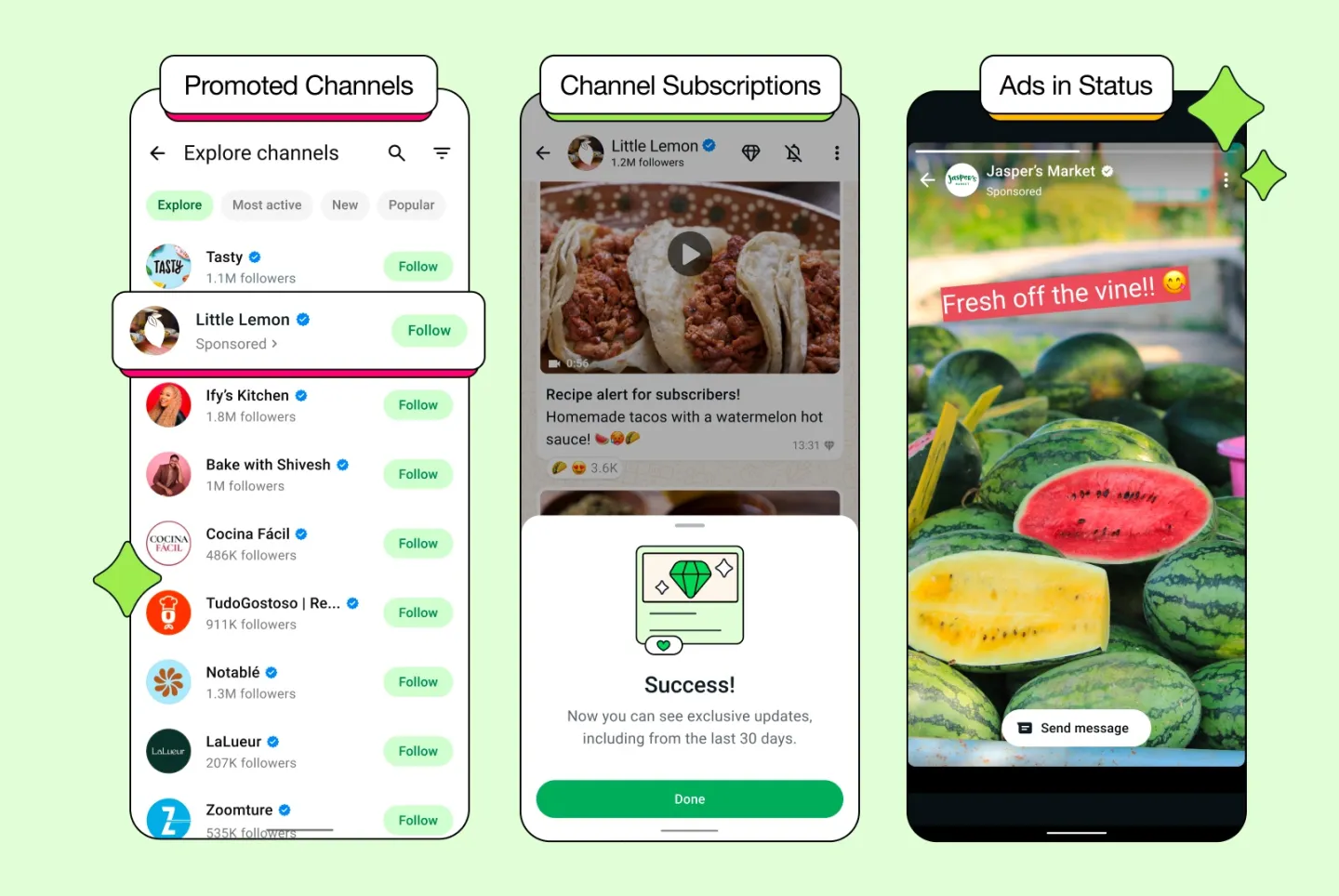
Source: The Verge
In parallel, WhatsApp is also introducing two other ways for users to discover businesses and channels:
- sponsored suggestions in the Explore tab
- promoted channels in search results
With more than 3 billion active users, this development is one brands should watch closely.
Boost Your Productivity with Perplexity Labs
After revolutionizing search with its instant-answer engine, then launching Deep Research for in-depth analysis, Perplexity has now introduced Labs: a workspace designed to tackle complex projects quickly and efficiently.
Available now for Pro subscribers, Perplexity Labs combines advanced web browsing, code execution, file creation, charts, spreadsheets, and even interactive web app development, all within a single intelligent workflow. The tool can produce in 10 minutes what would take days to accomplish manually.
Some possible use cases:
- Build a full marketing campaign from scratch
- Generate an interactive dashboard or financial report
- Develop a ready-to-use mini web app
Labs complements the Search feature by going one step further: it's no longer just about answering a question but about delivering the associated outputs. A real opportunity for any organization looking to get more done.
All the Latest Updates in GEO (Generative Engine Optimization)
Improve Your GEO Ranking with an llms.txt File
As AI engines like ChatGPT, Perplexity, and Claude redefine online search, making your website content accessible to these models is becoming essential to improving your visibility. That's where the llms.txt file comes in.
Inspired by the familiar robots.txt, this file helps guide AI models through your site structure: a summary of your mission, key sections, useful links, and more to help index your content.
How to get started:
- Create an llms.txt file in Markdown format, with a clear summary of your site and its key pages.
- Place it at the root of your site.
- Use tools like llmstxt.org or WordPress plugins to generate it easily.
- Update it regularly to reflect changes in your content.
To learn more and make sure you're visible on these AI platforms, we invite you to read this article.
How to Get Cited in Perplexity
With nearly 22 million active users, Perplexity has become a search engine worth paying close attention to. Optimizing your GEO (Generative Engine Optimization) to appear in its suggested results is increasingly strategic.
But how do you get there? A study by Neil Patel, covering more than 500k searches, reveals the types of sources Perplexity cites most often:
- Blogs: 33%
- News sites: 24%
- Industry-specific sites: 11%
- Product blogs: 5%
- User-generated content: 1%
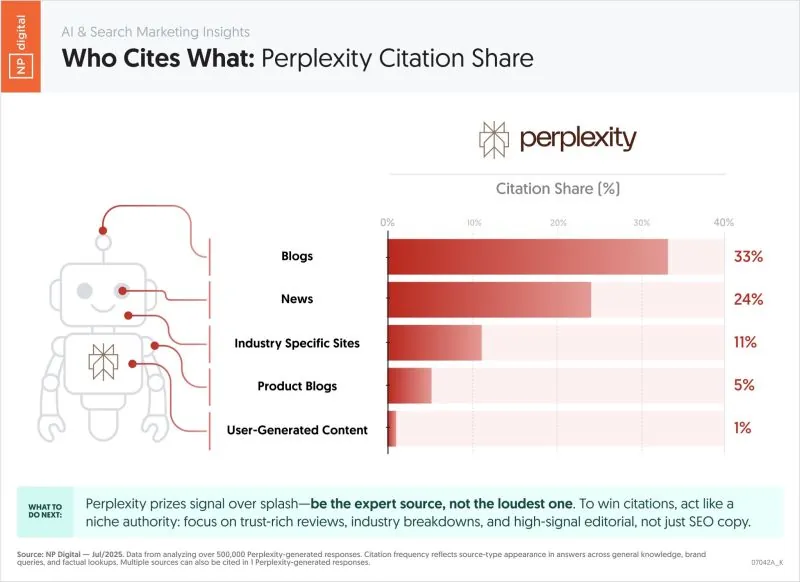
Source: Neil Patel
To grow your GEO presence on Perplexity, consistently publishing blog content remains the single most effective lever.
GEO vs. SEO: How Long Do Visitors Actually Stay?
Lately, several strategies have emerged to improve GEO (Generative Engine Optimization) rankings. But one question keeps coming up: do visitors arriving from AI search engines like ChatGPT, Claude, or Perplexity spend as much time on your site as those from traditional SEO?
That's exactly what Neil Patel's team set out to measure. Drawing on data from 300 companies, the study reveals that ChatGPT visitors tend to have longer session durations than those coming from Google.
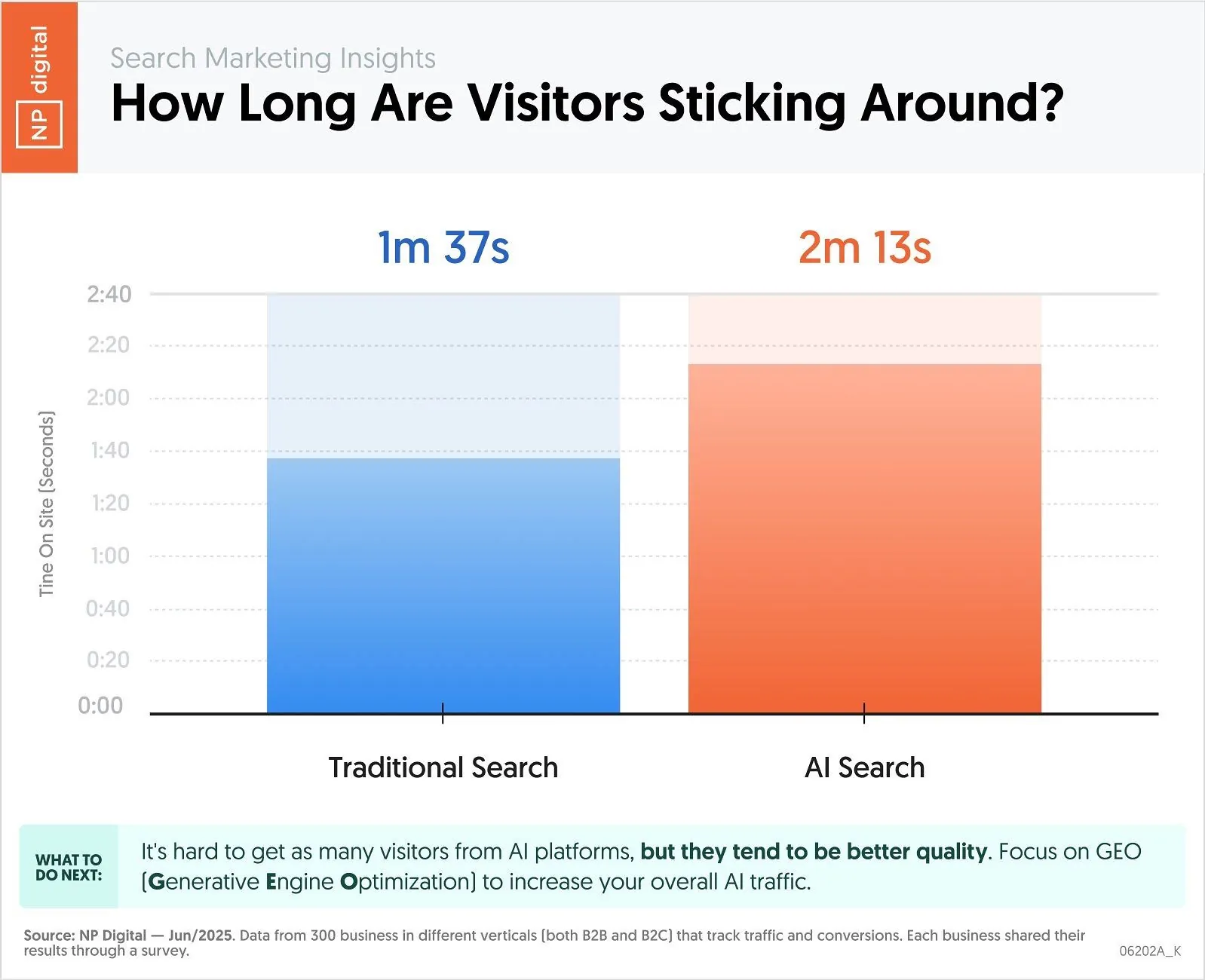
Source: Neil Patel
Have you compared this data in GA4? If not, it's well worth looking into.
TikTok's US Ban Saga: The Platform Is Developing a US-Only Version
The saga between TikTok and the US government continues. TikTok is reportedly developing a US-only version of its app, internally codenamed "M2", in order to comply with the Protecting Americans from Foreign Adversary Controlled Applications Act.
Set to take effect in September 2025, this law will require US users to download a separate version of TikTok if they wish to keep using the platform. They will have until March 2026 to make the transition.

Why the split? Largely due to US government pressure to limit foreign (particularly Chinese) influence over social platforms, while requiring that the algorithm not be controlled by a country deemed an adversary. China, for its part, has refused to hand over ByteDance's algorithmic technology.
This "M2" version would allow TikTok to continue operating in the US without sharing its Chinese-built algorithm. That said, it raises a key question: can a version of TikTok without its signature algorithm maintain the same level of engagement?
With more than 1 billion users worldwide, including 136 million in the US, this new version would allow American advertisers to maintain their organic and paid presence on the platform. But the effectiveness of the new algorithm will need to be validated before TikTok can be considered an equally powerful marketing strategy.
Threads Turns 2 and Keeps Growing
Two years already for Threads, Meta's app launched as an alternative to X (formerly Twitter). Success or flop? With 350 million active users, the platform is showing consistent and impressive growth.
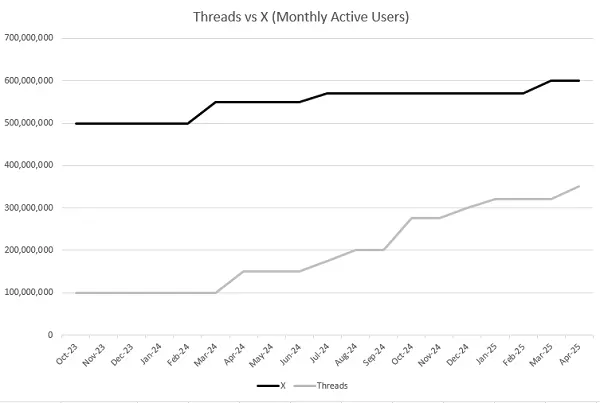
Source: Social Media Today
According to Social Media Today, Threads is gaining new users at a faster pace than X, even though X still leads in overall volume.
Not on Threads yet? Now might be a good time to explore this fast-growing platform and strengthen your social presence.
June 2025 Google Core Update: Your Rankings May Have Been Affected
As happens several times a year, Google rolled out an update to its search algorithms. Launched at the end of June 2025 and deployed over approximately three weeks, this update, which requires no action on the part of businesses, may still have impacted your search rankings. In fact, many businesses reported a significant drop in their average position in Search Console. It's worth checking whether your rankings have stabilized since the rollout wrapped up.