


Google is preparing a new era of commerce: why SEO will have to adapt to artificial intelligence
After unveiling its Universal Commerce Protocol (UCP), Google is presenting its vision of a form of commerce in which artificial intelligence agents will play a growing role in the buying journey. The protocol aims to let AI systems better understand products, prices, availability, delivery options and purchase conditions in order to support consumers, from discovering a product all the way to the transaction.
The goal is clear: to give AI assistants a common language so they can interpret businesses’ commercial data more effectively and offer smoother shopping experiences in Google’s AI-compatible environments.

A recap of the main UCP features
- Product discovery and recommendation: AI assistants will be able to analyze merchants’ catalogues to recommend more relevant products based on users’ context and needs.
- Enriched commercial data: the protocol makes it easier to access essential information such as prices, stock, variants, delivery methods and other product attributes.
- AI-assisted buying journey: intelligent agents will be able to support users at every step, from search through to completing the purchase.
- Reduced friction: the goal is to simplify exchanges between merchants, technology platforms and payment solutions.
- Greater interoperability: the UCP offers a common structure that facilitates exchanges between the various systems and AI agents.
What the UCP changes for organic search (SEO) and businesses
For brands and retailers, this shift marks a change in perspective. Organic search will no longer rely solely on the ability to generate clicks, but also on the quality of the data made available to search engines and AI systems.
Even if these shopping experiences are not yet widespread, businesses have every interest in getting ready now. Merchant Center product feeds, structured data (Schema.org) and the quality of commercial information will become even more strategic levers to help AI systems understand, compare and recommend their products.
The challenge will therefore no longer be only about ranking well in search results, but also about providing complete, consistent and reliable data that can be leveraged by the new AI-powered search experiences.
Google and Meta strengthen transparency for ads created with artificial intelligence
Artificial intelligence is rapidly transforming ad creation, and the major platforms are adapting their practices to offer users more transparency. Google and Meta are announcing new measures designed to indicate when an ad has been created or modified using AI tools.
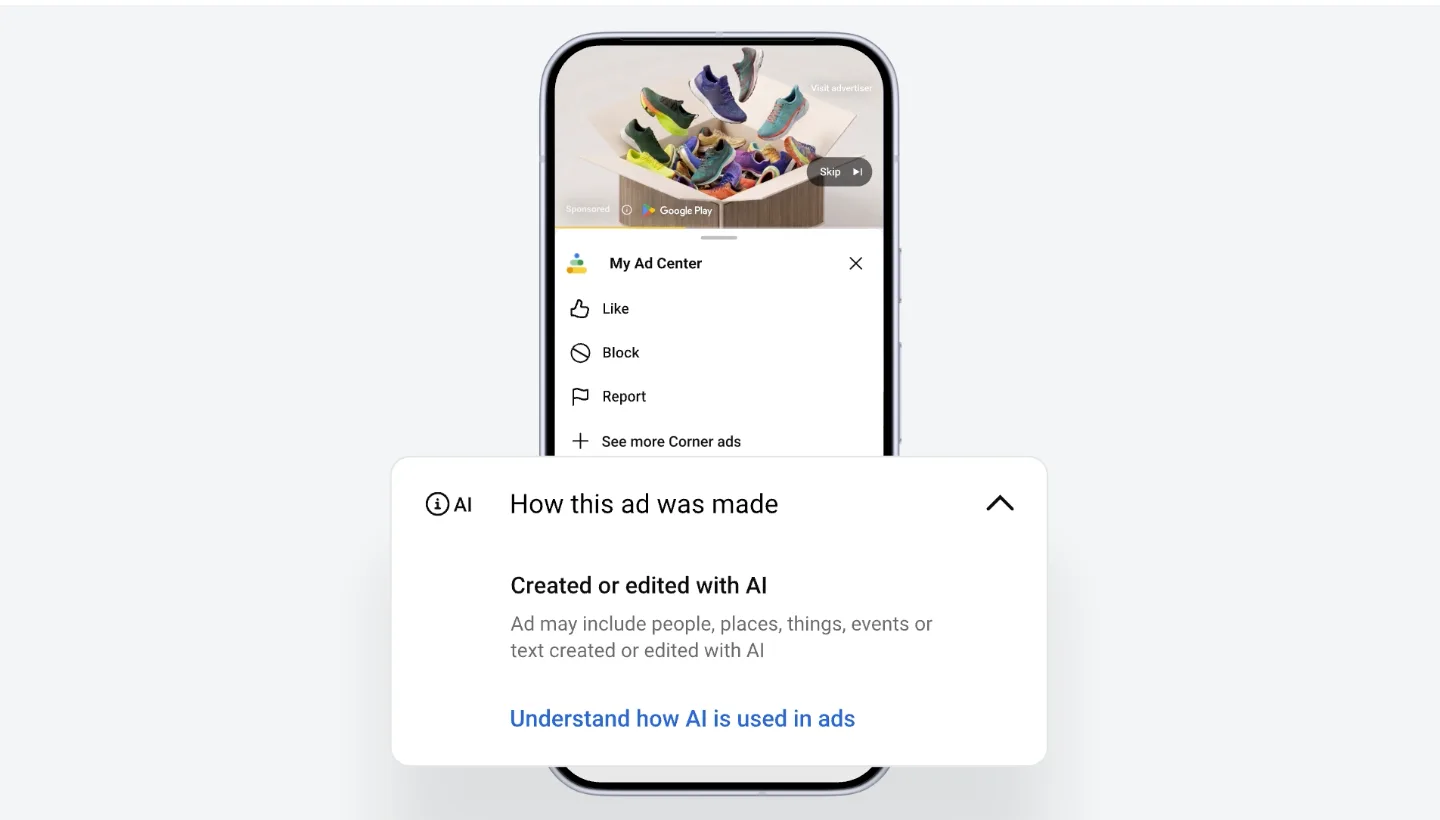
Google is adding a new section accessible from an ad’s information menu, which will indicate whether artificial intelligence was used in its creation process. To do so, the company will rely notably on its SynthID technology as well as certain standards such as C2PA metadata to identify content generated by different tools.
For its part, Meta is updating the information displayed in the “About this ad” section on Facebook and Instagram. Depending on the case, a label may be applied automatically when a piece of ad content has been created or modified using an artificial intelligence tool, whether it comes from Meta or from a third-party solution.
Transparency is now essential
These announcements confirm that transparency is becoming an unavoidable issue in digital advertising.
AI will continue to accelerate the creation of visuals, videos and ad variations, but advertisers will also need to preserve consumers’ trust by adopting responsible and transparent practices.
Web visibility is changing: Google Search Console adapts to new user journeys
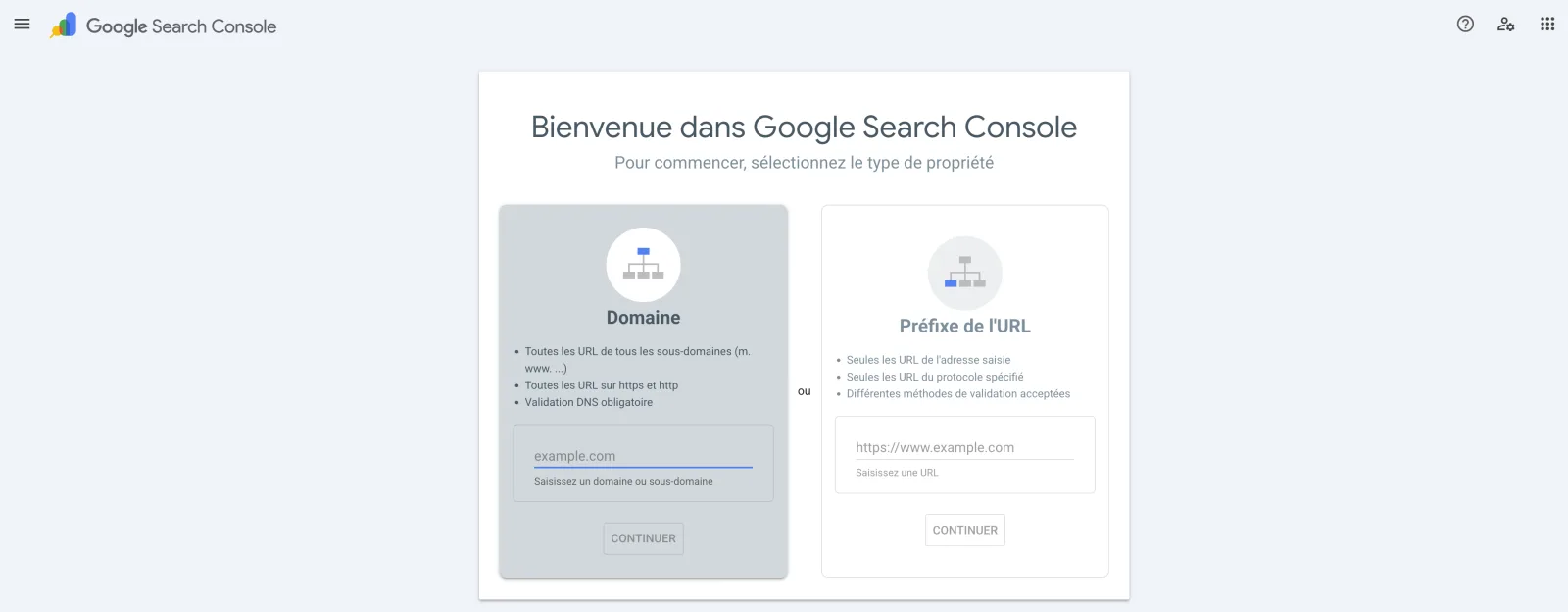
Google is starting to roll out platform properties in Search Console to help site owners better understand the performance of their content beyond traditional search results. This evolution aims to offer a more global view of digital visibility, notably by taking certain social and video platforms into account.
How does it work?
Once a platform is added and verified in Search Console, businesses can review indicators such as impressions, clicks, click-through rate (CTR) and the average position of their content in Google results.
It is important to note, however, that this data does not correspond to the native statistics of social networks. It measures only the visibility of content when it is discovered through Google’s various surfaces, such as Search, Discover or Google News, depending on the eligible platforms.
What it changes for businesses
This new feature broadens the way a brand’s visibility is measured within the Google ecosystem. By integrating certain social and video platforms into Search Console, businesses can better understand how their content is discovered in Google Search, Discover or Google News, without having to rely solely on each platform’s own statistics or on the traffic observed in GA4.
For marketing teams, this new data source makes it easier to analyze how content published on different platforms contributes to the brand’s overall visibility, and it encourages a more integrated approach between content strategy and search.
Google Tag Manager automatically fixes certain installation errors
Google Tag Manager is rolling out an update that automatically corrects certain incorrect installation paths, notably when containers have been configured with the /gtag/ path rather than /gtm/.
Until now, this error could limit certain Google Tag Manager features and prevent non-Google tags from running properly. Thanks to this fix, the affected containers will now be able to function normally, without any action required from users.
Even though this update affects a limited number of sites, it is a reminder of how important it is to maintain a rigorous configuration of measurement tools in order to ensure the quality of the data used for marketing decisions.
Digital marketing enters a new phase
AI is rapidly transforming commerce, advertising and digital measurement tools. One thing is clear: businesses must not only be visible, but also provide reliable, structured data so they can be better understood by platforms and intelligent systems.
SEO, digital advertising and performance analysis keep evolving.
Would you like to prepare your digital strategy for these changes? Contact our team for support in optimizing your data, your tools and your online presence.