



U.S. Tariff Increases: What Does This Mean for Your Business?
The Sectors Hit by Rising Tariffs
Since returning to the presidency in 2025, Donald Trump has announced new tariffs on several categories of goods entering the United States. The steel and aluminum sectors have been hit especially hard, with a 25% tariff in effect since March 12.
Additional tariff hikes were expected to roll out starting April 2 across several industries, including:
- Agriculture, with taxes on certain food products exported to the U.S.
- The pharmaceutical industry, with restrictions on certain medications.
- Copper and softwood lumber, two key sectors for Canadian exporters.
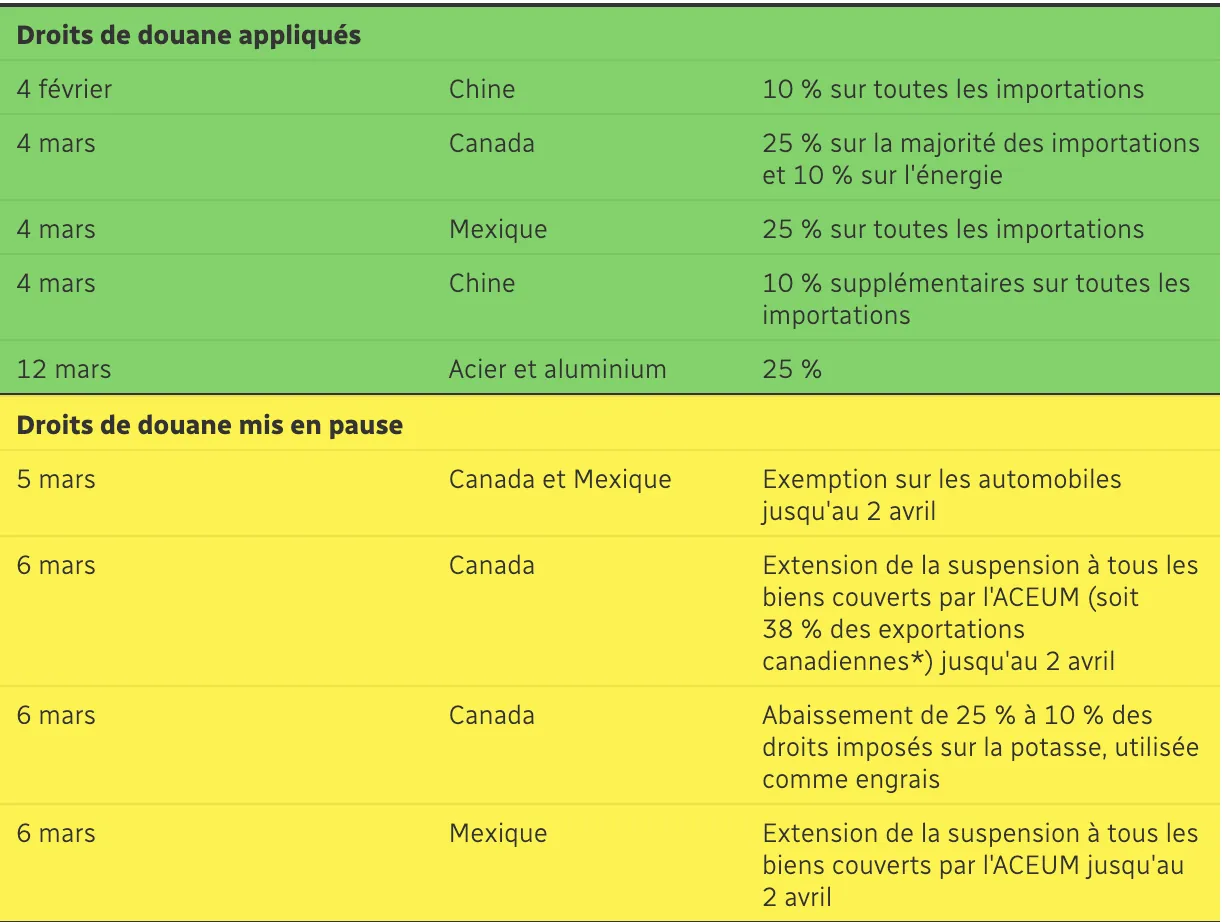
At the same time, China has retaliated by applying additional tariffs on various Canadian products, including canola oil, seafood, and pork.
With these constant shifts, exporting businesses need to keep a close eye on regulatory changes. To stay up to date, visit this resource.
How to Optimize Your Strategy in the Face of These New Tariffs?
With rising tariffs, several options are available to minimize the impact on your business:
- Diversify your export markets to reduce dependence on the U.S. and China, prioritizing sectors covered by free trade agreements.
- Invest in the domestic market by adapting your advertising budget and highlighting Canadian-made products.
- Optimize your supply chain to reduce production costs and limit the impact of tariff increases.
And on the marketing side? Here are some practical ideas:
- Price smartly while staying competitive:
Offer installment payment options to make purchasing easier.
Bundle products to increase perceived value.
Run limited-time promotions to attract new customers.
Boost average order value through upselling and cross-selling strategies. - Strengthen your brand's perceived value instead of justifying a price increase:
Highlight your differentiators (environmental impact, superior quality, durability, made in Canada or Quebec, etc.).
Educate your customers on the long-term benefits of your products or services.
While rising tariffs pose a major challenge, a fast and strategic response will help soften the blow.
Need help adapting your marketing strategy? Contact us for personalized support.
Has AI Disrupted How Users Search Online?
With AI chatbots growing in popularity, you might wonder whether Google is still relevant and whether your SEO efforts are still well directed. To answer that, Neil Patel conducted a study in March 2025 of 5,301 ChatGPT users, finding that 85% of them still prefer to search on Google rather than on ChatGPT.
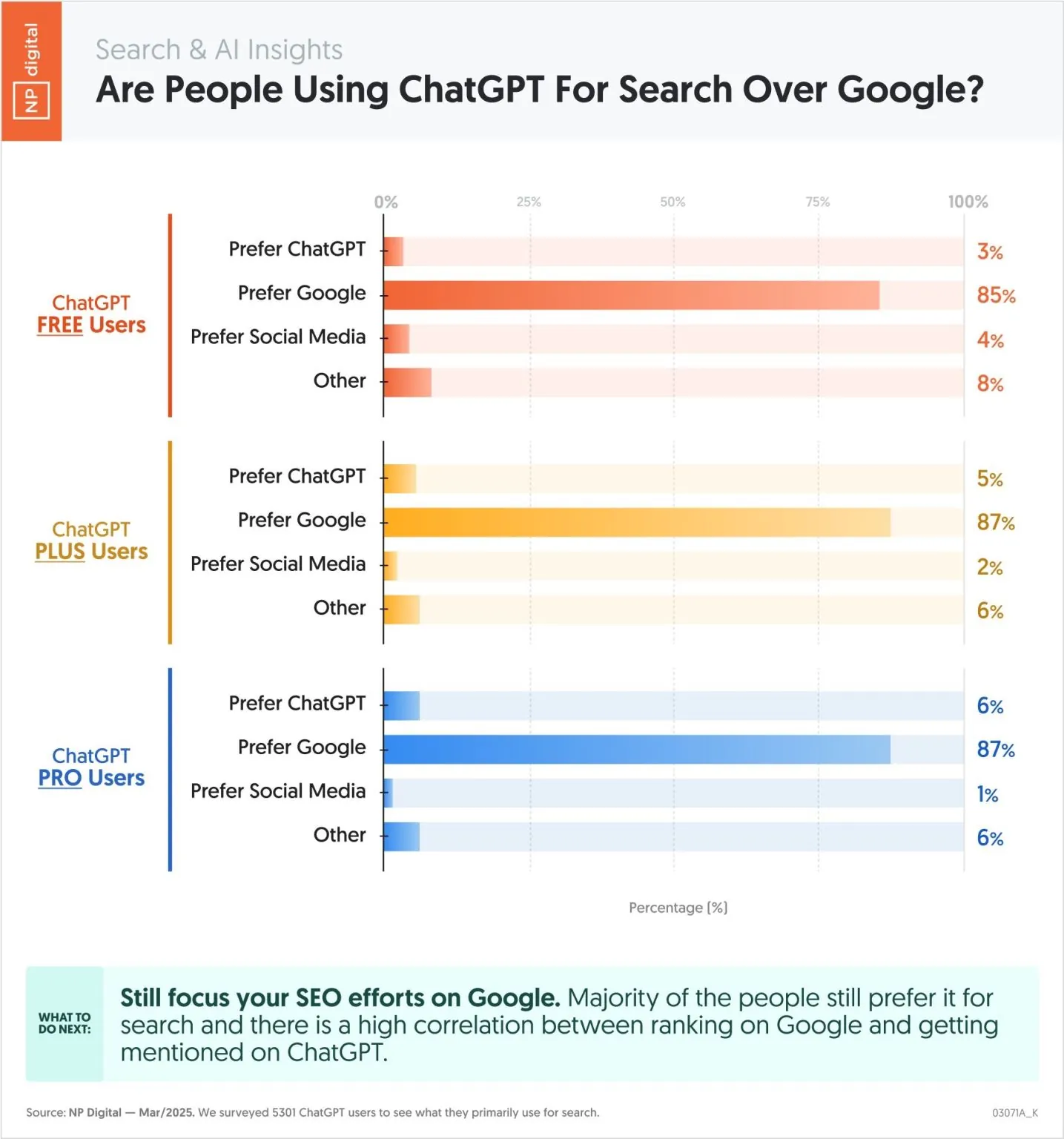
Google remains the go-to platform for most searches. That said, it is essential to monitor this shift and optimize your content for emerging platforms like ChatGPT.
Pinterest Steps Up Transparency Around AI-Generated Images
To address the surge of AI-generated images on its platform, Pinterest has introduced a labeling system that flags whether a visual was created or modified using artificial intelligence. These labels appear directly on the images, except for ads, where the information is accessible within the settings.
The platform also offers an option to opt out of having your content used to train its AI models, a move aimed at increasing transparency and giving users more control over their posts.
AI Agents: A Promising Future for Marketing Efficiency

Did you know it is now possible to assign specific tasks to AI agents that execute them on your behalf? For example, OpenAI's Operator agent can interact with websites to handle tasks like finding the best deals or placing orders, all without any manual input.
In marketing and sales, these agents can automate prospecting, generate detailed reports, and streamline processes, cutting down work hours and boosting team efficiency. Learn more about the latest solutions available.
Law 25 (Quebec's Law 25): Where Do Things Stand?
Phased in gradually since September 2022, Law 25 aims to strengthen the protection of personal data for Quebec residents.
Yet a recent study found that many major Quebec media outlets are still not compliant. The analysis, which looked at the most-visited websites in Quebec, revealed that most lacked compliant consent banners and several were still collecting data without adequate transparency.

At Ursa Marketing, compliance and user data protection are core priorities. Keep in mind that businesses that fail to meet these requirements face penalties of up to $25 million or 4% of their worldwide revenue.
Not yet compliant? Contact us today and we will guide you through the transition to avoid any penalties.