


Selling on Amazon.ca as a Canadian brand? In 2025, that's a solid starting point. But it's clearly no longer enough on its own. With platform saturation and growing competition from both local and international sellers, your products risk staying invisible without a strong paid advertising strategy.
In this article, we break down how to build a high-performing Amazon Ads campaign tailored to your budget, your products, and your reality as a small or mid-sized business.
The 30-second summary
Amazon holds 47% of Canadian e-commerce as of 2023 (source): it's the one storefront you can't afford to ignore.
Without ads, your products almost never appear at the top of search results.
There are 3 ad formats: Sponsored Products, Sponsored Brands, and Sponsored Display.
Amazon Ads runs on a CPC model, with dynamic bidding and a demanding algorithm.
Focus on coherent product groups, not one campaign per product.
A polished product listing is the foundation of profitability.
Why Amazon Ads Is Non-Negotiable in 2025
Amazon.ca: A Hyper-Competitive Marketplace
Amazon.ca attracts over 200 million visits per month. Thousands of sellers, many of them international, compete relentlessly for the same eyeballs. The result: without sponsored placements, your products are simply invisible.
Amazon Ads: A Matter of Survival
The top results are almost entirely sponsored. Amazon favors products that sell. And to sell, you need to be seen first.
How Amazon Ads Works
Available Ad Formats
Campaign Type
Goal
Recommended Budget
Average ACOS
Sponsored Products
Promote a specific product
Moderate
15-30%
Sponsored Brands
Boost a brand or product line
Moderate to high
20-35%
Sponsored Display
Retargeting / lookalike audiences
Variable
25-40%
⚠️ Amazon DSP (video + off-Amazon Display): reserved for large budgets ($5,000+).
Bids, Placements, and the Algorithm: How It All Works
Amazon Ads operates on a cost-per-click (CPC) model. You bid for visibility.
3 Placement Options (Sponsored Products)
- Top of Search (first row of results): highest performance, but also the most expensive.
- Rest of Search: remaining positions on the search results pages.
- Product Pages: your ad appears on a competitor's product detail page.
Available Bidding Strategies
- Dynamic up and down: Amazon raises or lowers your bid based on conversion likelihood.
- Down only: bid is reduced only when the probability of a sale is low.
- Fixed bids: your bid stays constant.
Keyword Match Types
- Broad: the keyword plus close variants.
- Phrase match: matches an exact phrase in the query.
- Exact match: must be typed exactly as specified.
Common Pitfalls to Avoid (and There Are Plenty)
Over-Relying on Long-Tail Keywords
Unlike SEO, highly specific keywords like "organic anti-aging cream 50ml" get very few searches on Amazon Ads. Amazon doesn't factor them into its suggestions or ad targeting.
Instead, rely on Amazon's own keyword suggestions, which come with an estimated CPC. These reflect actual shopper search behavior.
Segmenting by Product Right from the Start
Creating one campaign per product is inefficient, especially without historical data. Start with related product groups, then refine over time.
Mixing Campaign Objectives
Awareness campaigns and conversion campaigns have different metrics. They need to be separate.
Underestimating the Importance of Your Product Listing
No matter how good your ad is, a weak product listing will kill your conversions.
Best Practices for a Profitable Amazon Ads Campaign
Structure Your Campaigns Intelligently
- One campaign = one objective (conversion, visibility, retargeting).
- One ad group = one product line or one intent.
Choose the Right Keywords
- Don't rely on gut instinct. Use Amazon's suggestions combined with Helium10 or SellerApp.
- Use all 3 match types (broad, phrase, exact).
- Test, measure, iterate.
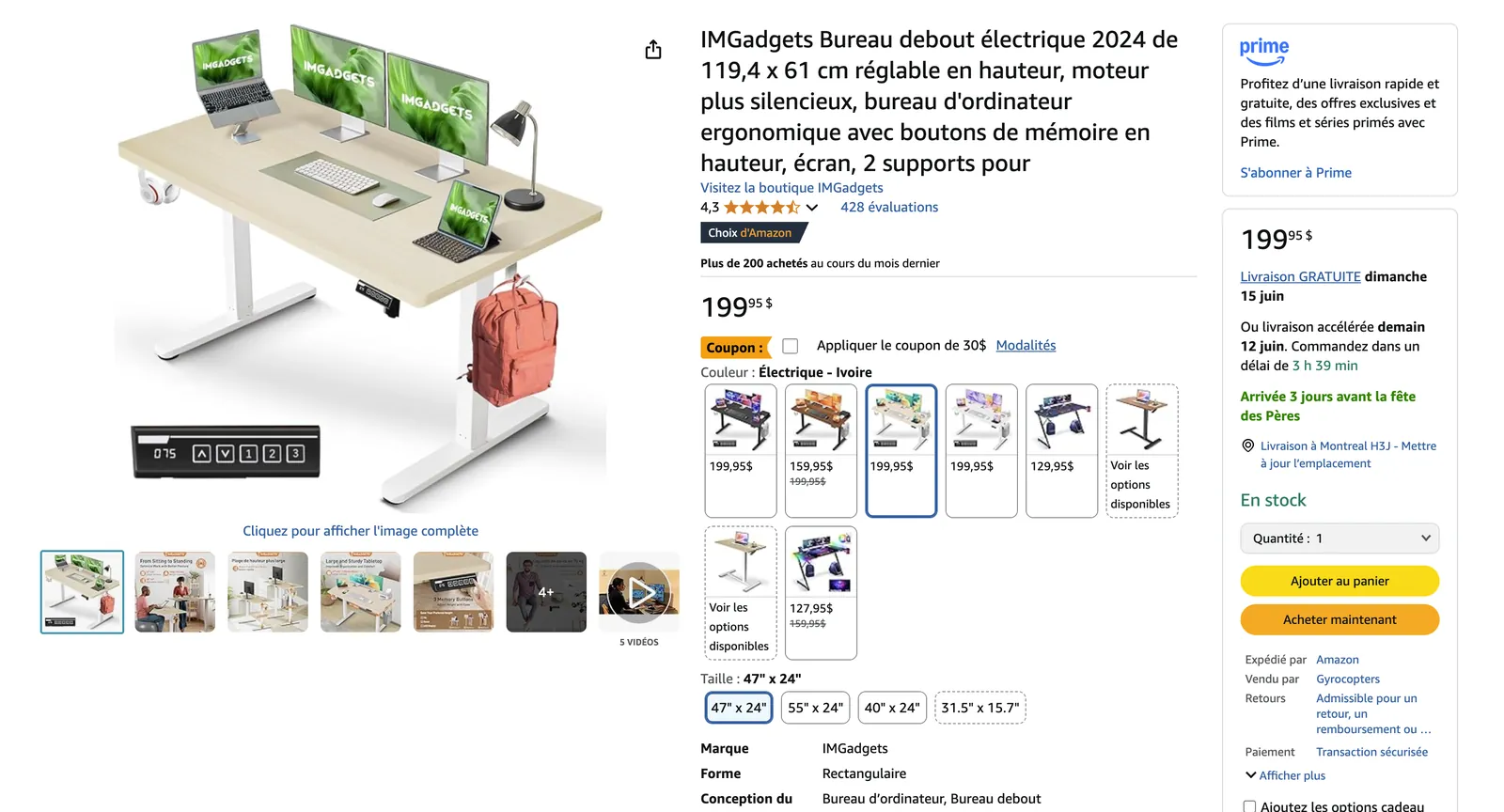
Optimize Every Element of Your Product Listing
- ✅ Title up to 200 characters with keywords front-loaded
- ✅ 7 to 9 HD photos, white background, lifestyle shots where possible
- ✅ Bullet points focused on benefits, not just features
- ✅ A+ Content for registered brands (conversion lift of 3 to 10%)
Measure and Adjust Every Week
- One change at a time so you know what's actually working.
- Track: ACOS, ROAS, click-through rate, conversion rate, and sales by keyword.
What Budget Do You Need to Launch on Amazon Ads?
Launching a product on Amazon with paid advertising requires a well-planned upfront investment. Here's a breakdown of the costs to factor in for a product with a $12 manufacturing cost:
Expense
Estimate (CAD)
Amazon seller account (Pro)
$29.99/month
Visual content creation (photos / video)
$500 to $1,500
Initial inventory (200 units at $12)
$2,400
Custom packaging
$500 to $1,000
Shipping to Amazon (FBA)
$100 to $300
Trademark registration (if applicable)
$300 to $500
Amazon Ads (launch: $30/day x 30 days)
$900
Miscellaneous / contingency buffer
$300
Estimated total launch cost
approx. $5,000 to $7,000
This represents a realistic baseline for launching with effective campaigns and avoiding nasty surprises. You can trim some costs, but under-investing in advertising or visual quality can seriously hurt your performance.
Why Work with an Amazon Ads Agency?
Save Time and Avoid Costly Mistakes
We structure your campaigns correctly from day one.
Get a Strategy Tailored to Your Products and Margins
Selling a lightweight product? We focus on fast turnover. A premium item? We adapt to a longer purchase cycle.
Build a Multi-Channel Vision
Amazon Ads can plug into your Google Ads, Meta campaigns, and email marketing. We align everything.
Ready to Grow Your Amazon Sales?
We can help you structure your account and your ads to drive real performance gains.
Book a call with our team to take your sales to the next level. Get in touch and let's talk about your project.
FAQ: Amazon Ads for Canadian Brands
What is a Sponsored Products campaign?
An ad format that promotes a specific product directly in search results or on a competitor's product page.
What budget do I need for Amazon Ads?
Plan for at least $30/day per campaign to get actionable results.
How do I choose the right keywords?
Amazon provides relevant keyword suggestions with estimated CPC. Use those, cross-reference with your Helium10 data, and run tests.
Are Amazon Ads effective for SMBs?
Yes, provided you have an optimized product listing, a thoughtful targeting strategy, and a well-structured campaign.
What's the difference between Amazon Ads and Google Ads?
Amazon Ads targets shoppers who are ready to buy. Google Ads typically reaches people earlier in the purchase funnel.