


A strong year starts well before January 1st. By taking the time to analyze your data, your audiences, and your channels, you can enter 2026 with a smarter, more targeted digital marketing strategy that is ready to adapt to a constantly evolving market. Here are our tips for building an optimal strategy and the key trends to watch so you can stay at the top of your game.
Define Your Strategic Goals and KPIs
Before taking any action, clarify your ambitions for the year:
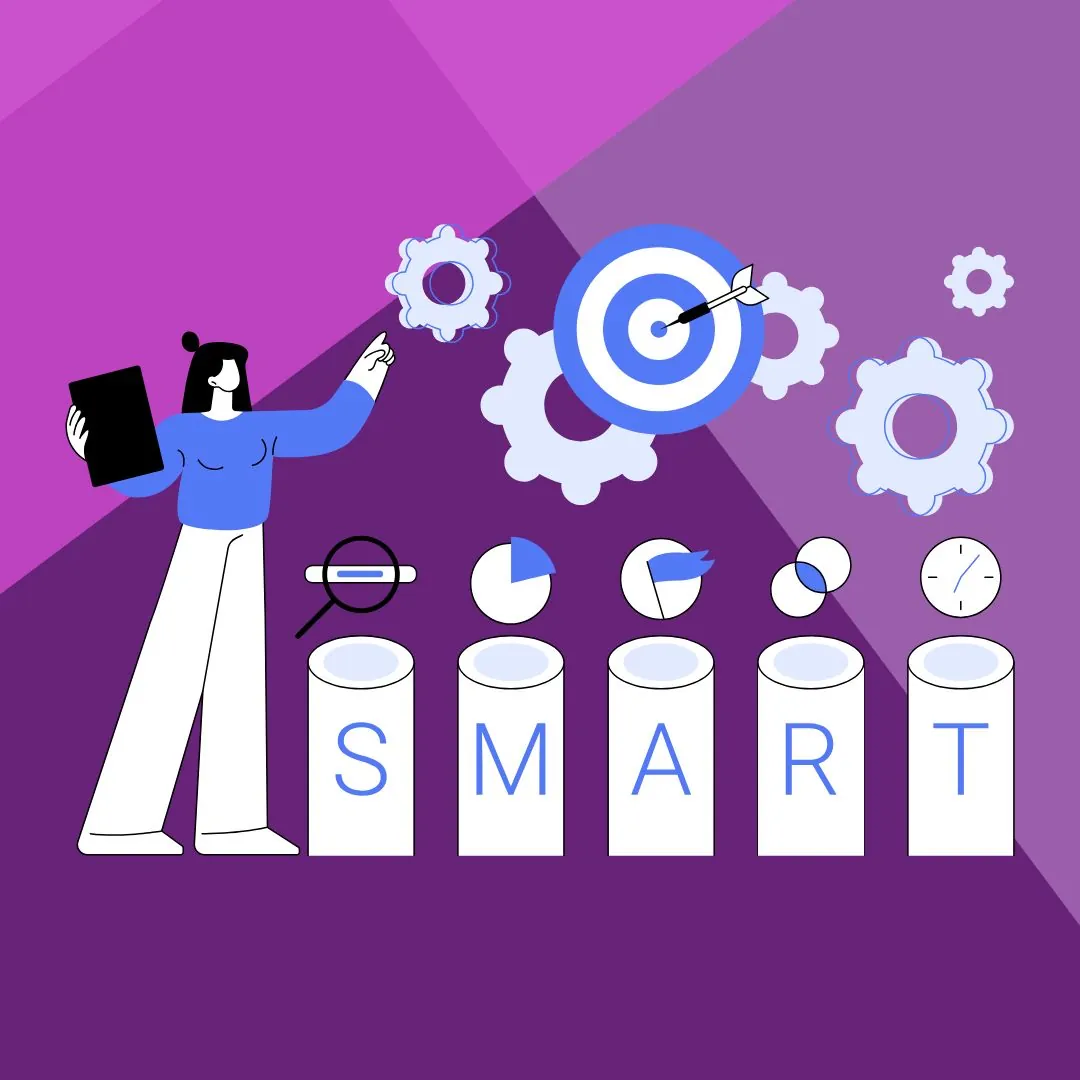
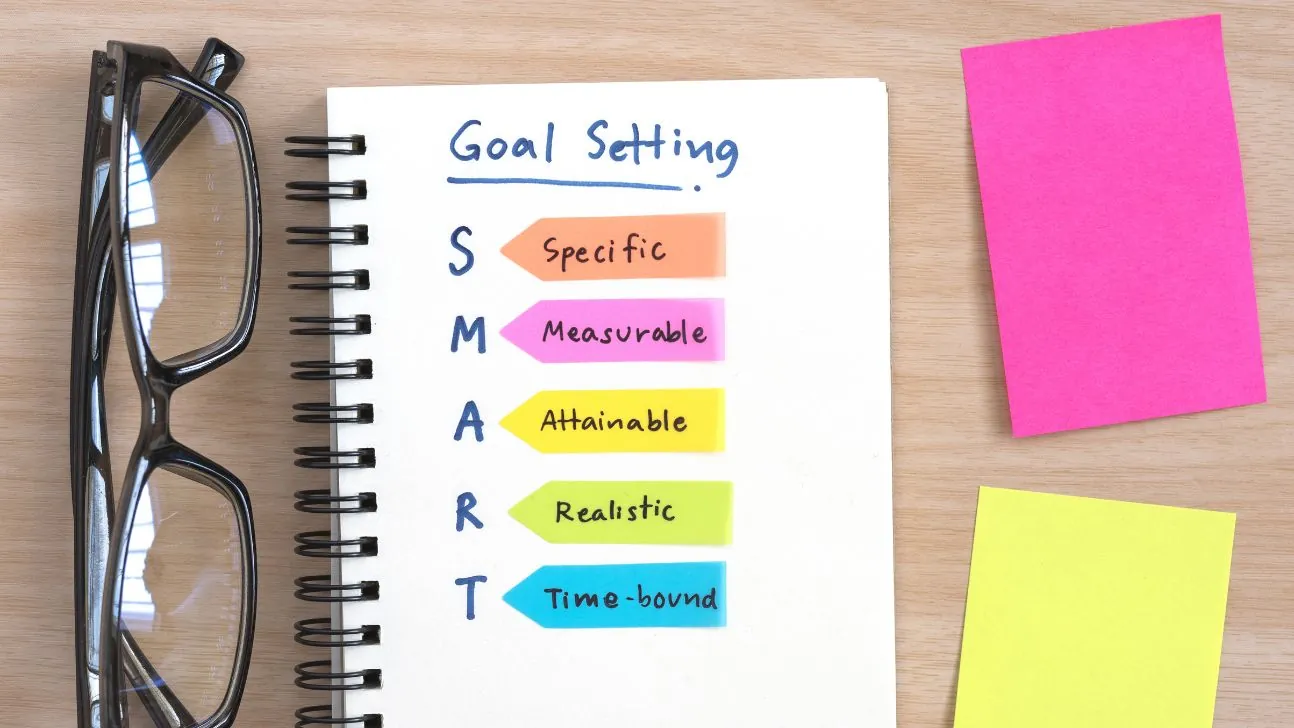
- Set SMART goals (Specific, Measurable, Achievable, Relevant, Time-bound) and rank them according to your business priorities.
- Tie each goal to concrete performance indicators. These KPIs will vary depending on your industry (for example, cost per acquisition in B2B vs. ROAS in e-commerce) and the stage of the conversion funnel you are targeting.
For instance, if you want to build brand awareness, you might track engagement KPIs (cost per engagement) and traffic KPIs (cost per landing page view).
On the other hand, if you want to support users at the bottom of the funnel, you would track KPIs such as cost per acquisition, ROAS, average order value, and so on.
To go deeper on developing KPIs, check out this article.
Audit Your Past Performance and Budgets
To build your 2026 digital strategy, start with a clear assessment of the previous year. This audit should cover both your paid and organic efforts.
Website Analysis
To optimize your digital strategy, it is essential to identify which pages and content on your website contribute most to lead acquisition, brand awareness, and conversions.
- Traffic Sources
Analyze your traffic sources in Google Analytics (GA4) to evaluate the purchase journey across different channels (organic, Paid Search, Email, Direct, etc.). Review the Conversion Paths report to understand how each channel influences conversion funnel stages and identify the most effective channel combinations.
- UX Optimization
Using GA4, explore the engagement reports to identify pages with the highest average session duration, the lowest bounce rate, and the greatest number of conversions. This data will help you pinpoint your best-performing content.
Then analyze these pages to spot patterns or shared elements you can replicate across other sections of your site. For example, high-converting pages may share characteristics such as prominent CTAs, content structure, or streamlined forms. Use those insights to strengthen the overall effectiveness of your user experience.
- SEO Analysis
On the organic side, review your keyword rankings using Google Search Console (GSC). Identify the queries generating the most impressions and the best CTR, then track ranking trends by separating branded and non-branded keywords.
Compare your indexed keywords against your competitors to uncover new opportunities to weave into your content. Also run a technical SEO audit of your site to detect areas for improvement (load time, internal linking, meta tags, indexing) and maximize your visibility and site performance.
Advertising Campaigns
To maximize the return on your advertising investments, it is essential to analyze campaign performance against your established goals. This evaluation will help you identify the best-performing platforms, audiences, and messages, and refine your 2026 strategy based on concrete data.
How to do it:
- Log into your ad platforms (Meta Ads, Google Ads, etc.) and sort your campaigns by the KPI associated with each campaign's objective (awareness, traffic, conversions, engagement, etc.).
- Compare the same KPI metrics across platforms and campaigns to identify:
The platforms and audiences that perform best for your given objective.
The most effective messages, visuals, and formats. - For example, if you want to build brand awareness with traffic-focused campaigns, analyze the campaigns across your various platforms that share that objective. Study indicators such as cost per landing page view and CTR. This will help you determine whether, for instance, Meta Ads is more cost-effective than LinkedIn, and see which formats perform best (e.g., authentic team-filmed video vs. more generic content).
These analyses will help you steer your strategies based on real performance data, not gut instinct.
Revisit Your Personas and Audience Behaviors
Buying behaviors are shifting fast, especially in a context where AI is increasingly shaping customer journeys.
Use this time to:
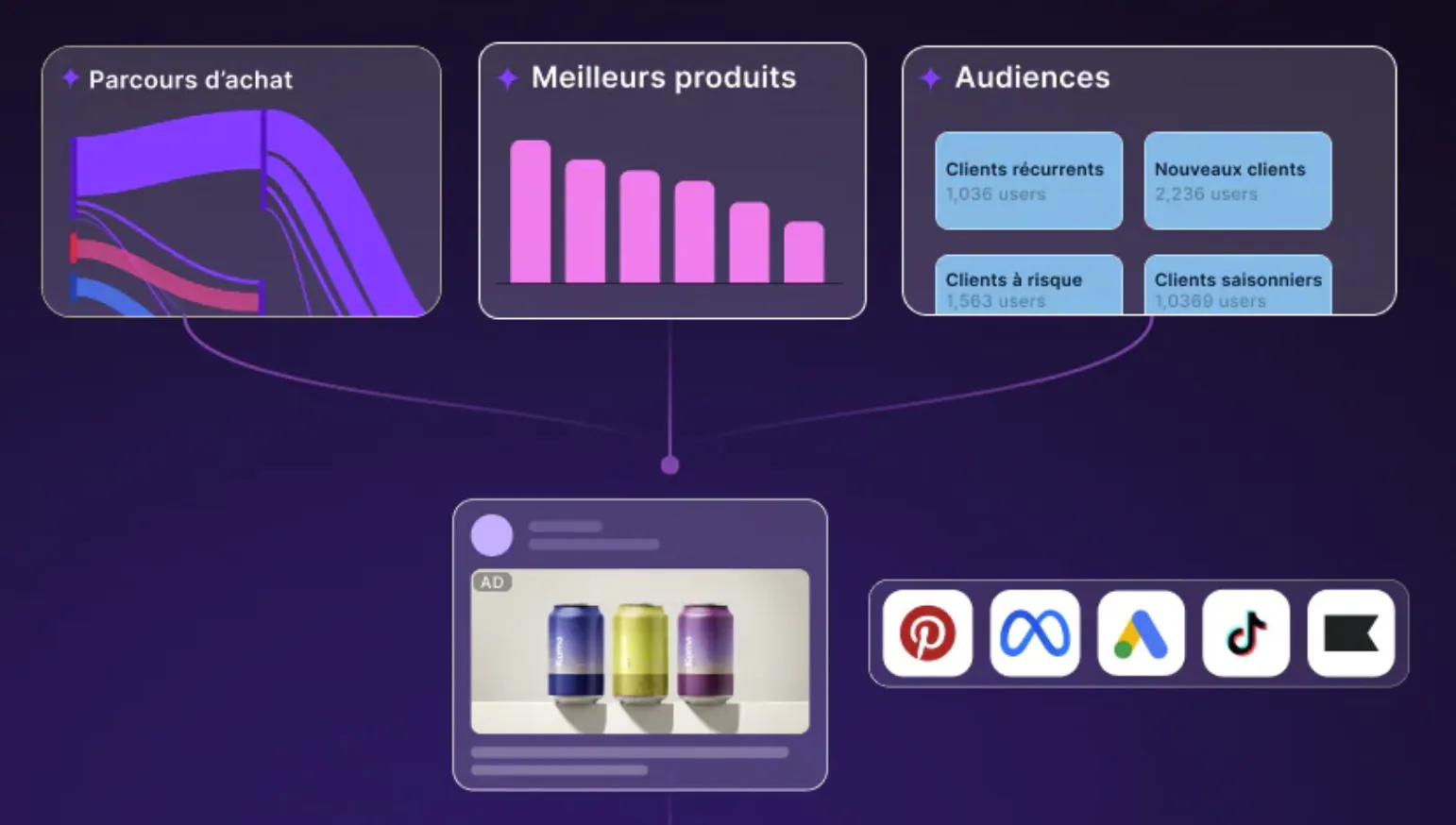
- Update your personas using cross-referenced data from your campaigns, your CRM, and Google Analytics.
- Study the purchase journey, motivations, pain points, and current needs of your personas.
A deep understanding of your personas lets you create more personalized campaigns and achieve a better return on investment. This is where first-party data comes in. Collected directly from your customers, this information is critical: it enables more precise segmentation and is the only fully reliable, compliant data source for optimizing the customer experience over the long term.
To analyze your Shopify users' behavior with a single click, we recommend the Kuma app.
Factor In Historical Sales and Seasonality
Analyzing your peak and slow periods is essential for planning your budgets and creative efforts:
- Identify your sales peaks (holidays, seasonal events, promotions).
- Anticipate slow periods to test new approaches.
- Adjust your monthly budgets based on actual observed demand.
Embrace Monitoring, Innovation, and Agility
Digital marketing moves at a breakneck pace. In 2026, the key to success lies in your adaptability and your ability to quickly integrate new trends.
Key Trends to Adopt in 2026
- Stay current with ad platform algorithms
In 2026, the effectiveness of your advertising campaigns will depend more and more on AI. But do not worry: you still have a critical role to play. See our tips below.
On Meta (Facebook/Instagram), the platform algorithm is increasingly driven by AI. Since the Andromeda algorithm update, Meta matches your creative to user signals to deliver your content to the right person. Variety in formats and visual concepts becomes essential so Meta can associate your ads with the right user intent. This shift also influences your targeting strategy: Meta now favors broad audiences rather than overly narrow segmentation. Learn more here.
On the Google Ads side, it is critical to adapt to the platform's AI-driven evolution. Performance Max (PMax) campaigns and AI Search Ads are gradually becoming the core of advertising strategy. To get the most out of them, it is crucial to master the analytics tools Google provides, such as channel performance breakdowns for Performance Max campaigns. This lets you identify the best-performing channels, components, creatives, audiences, and ad copy, and optimize your campaigns based on real data. Read more about the new Google Ads formats here.
- From SEO to GEO
Organic search is evolving rapidly with the rise of GEO (Generative Engine Optimization). This approach focuses on making your content cited and surfaced by AI-powered search engines such as ChatGPT, Claude, Perplexity, and Google AI Overviews.
We encourage you to review your Google Analytics account to analyze traffic coming from these channels, and to follow our recommendations for optimizing your GEO presence. These channels represent opportunities you cannot afford to miss, as their usage is becoming increasingly mainstream.
- UGC: A Winning Strategy on Social Media
User-generated content (UGC) is one of the most powerful levers on social media. When your customers organically talk about your brand through photos, videos, testimonials, or reviews, it creates an authenticity that pure brand-produced content simply cannot replicate.
That authenticity translates into tangible benefits: it builds trust, fosters brand loyalty, and acts as social proof capable of influencing purchasing decisions.
To leverage UGC strategically, make sure to:
- Be clear about what you are asking of your users (content type, format, hashtag).
- Always get permission before sharing content and credit the original creator. This preserves the relationship and the content's legitimacy.
- Align UGC with your marketing objectives: do you want to grow brand awareness or drive more conversions? Tailor the content accordingly.
By combining authenticity, permission, and alignment with your marketing goals, you can turn your customers into true brand ambassadors and maximize your social proof and organic reach.
Adopt an Agile Mindset
To stay competitive, your team must keep its finger on the pulse. Constantly monitor trends in AI, automation, and personalization. Always set aside a portion of your budget for emerging opportunities (e.g., a new platform launching, a major Meta or TikTok update). Continuously testing creative approaches and messaging is your best defense against stagnation.

In short, preparing for 2026 means combining analysis, adaptation, and agility.
- Define and prioritize your strategic goals.
- Analyze your data and past sales to better allocate your budgets.
- Redefine your personas and segment your audiences.
- Prioritize the platforms and formats that actually deliver results.
- Above all, stay agile so you can seize opportunities in an advertising landscape that never stops changing.
Need help acting as a powerful engine for profitability and growth in this ever-evolving digital landscape? Contact us for personalized support tailored to your needs.