


Meta Unveils Muse Spark, Its New AI Model from Superintelligence
Meta launched Muse Spark, a new AI model from its Superintelligence division. This launch is part of a broader evolution in the company's AI infrastructure, with a clear ambition: building systems that better understand user context and intent in order to deliver more relevant, personalized responses.
Muse Spark stands out for its multimodal capabilities (text, image, and context), as well as its use of multiple agents working in parallel to handle complex tasks. This approach improves response accuracy and addresses a wide range of use cases, from general assistance to visual analysis and specialized applications in areas like healthcare.
Meta also highlights performance and efficiency gains, alongside built-in safeguards to govern how the model is used.
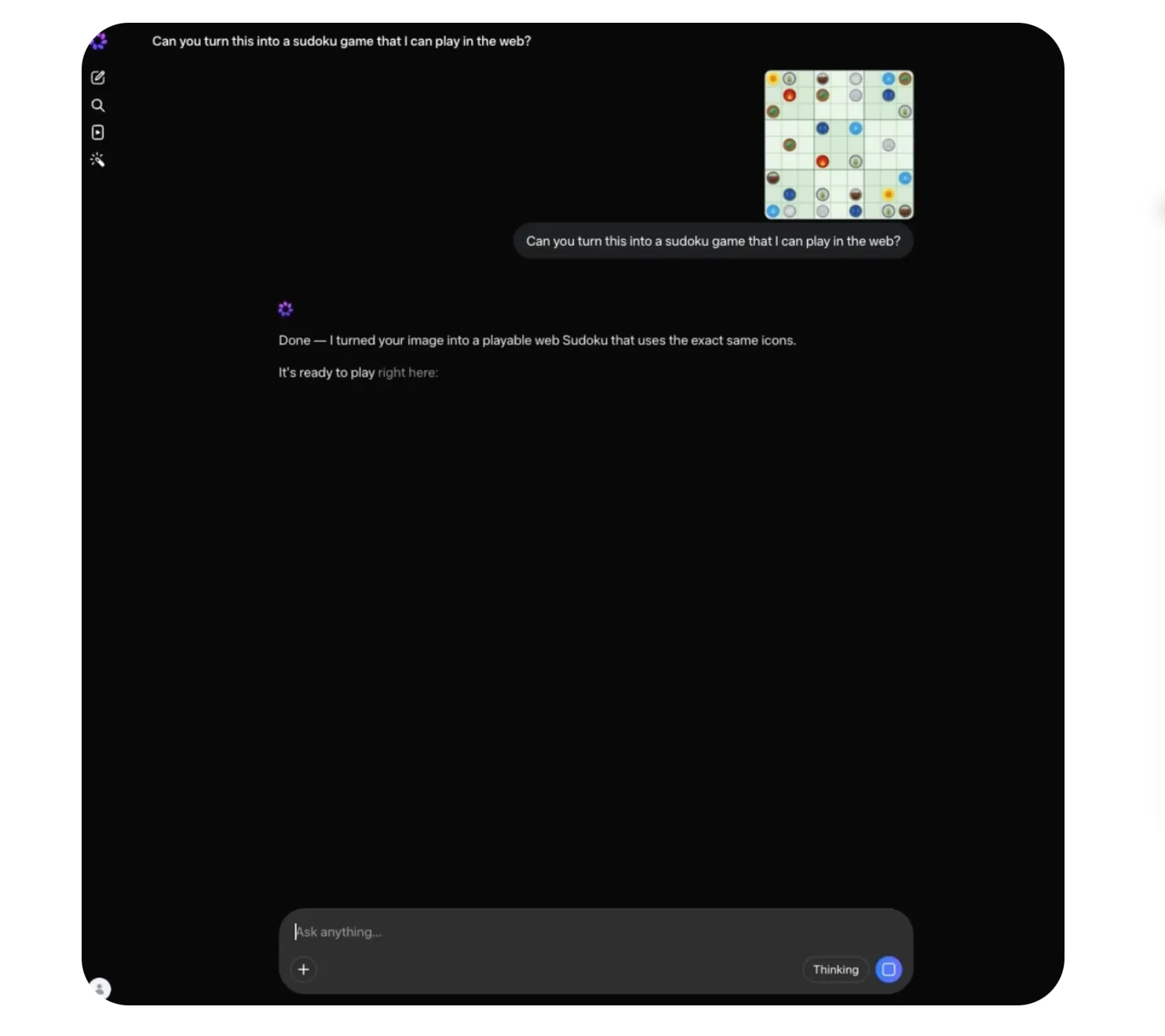
Already integrated into Meta AI, Muse Spark represents the first step in a new generation of models that will gradually reshape how artificial intelligence is used in everyday products.
TikTok x HubSpot: A Strategic Partnership for Unified Marketing
As digital channels become increasingly interconnected, TikTok and HubSpot are offering a native integration designed to consolidate key marketing activities within a single platform.
What the Integration Actually Does
Simplified TikTok Ads connection
Users can connect an existing TikTok Ads Manager account or create one directly from HubSpot, making setup straightforward without complex technical configuration. To handle the surge in applications, AI assists in the initial screening stage. It asks questions, analyzes responses, and delivers a summary to the recruiter, saving hours of manual work.
CRM-based audience activation
HubSpot data can be used to build audiences on TikTok, including customer lists and lookalike audiences, to sharpen acquisition campaign targeting.
More complete performance measurement
TikTok campaign results can be connected to CRM data, enabling more precise evaluation of lead quality and pipeline impact.
Simplified tracking and setup
The TikTok pixel can be deployed more easily on pages already tracked by HubSpot, helping improve conversion tracking consistency.
Reduced manual work
Automated data transfers cut down on manual exports and imports, reducing the operational burden on marketing teams.
Why This Matters for Businesses
Above all, this integration helps connect acquisition efforts to concrete CRM outcomes, offering a clearer view of the end-to-end customer journey. It helps teams work more efficiently, manage campaigns more effectively, and optimize ad spend on TikTok.
It can be especially useful for businesses looking to build their growth strategy around more connected data, bridging social media and commercial performance.
LLM Nudges: A Key Mechanism for Improving AI-Guided Journeys
"LLM nudges" refer to the small prompts embedded in responses from AI models like ChatGPT, Gemini, or Perplexity. After answering a question, these systems don't simply stop at an answer: they encourage users to continue the conversation with suggestions like "Would you like a comparison?", "Want me to suggest some alternatives?" or "Would you like options based on your budget?".
These micro-prompts play a far bigger role than they might seem. They gradually shape the user journey by steering decisions toward specific actions: comparing products, analyzing prices, exploring alternatives, or deepening purchase intent. In short, LLMs are no longer just informing users. They are actively influencing what happens next in the customer journey.
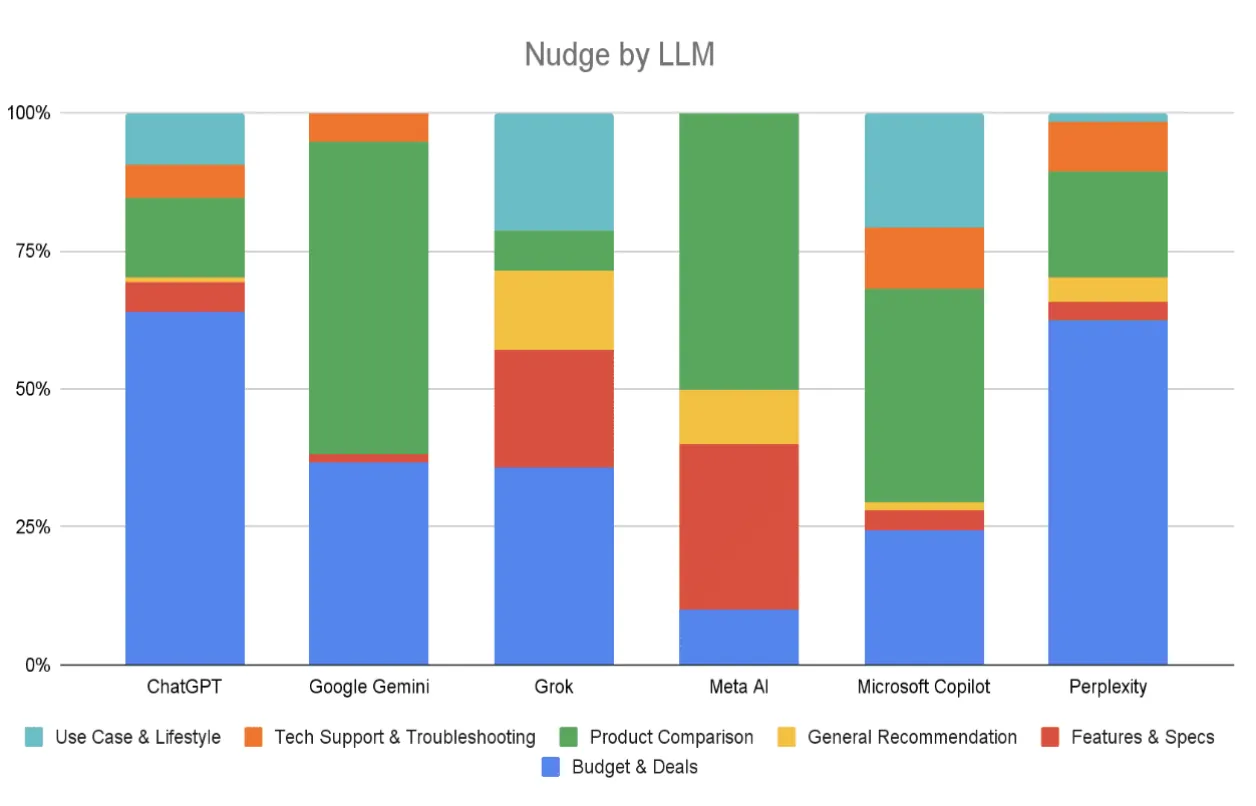
Analysis across platforms reveals clear trends. A large share of suggestions today focus on pricing, offers, and product comparisons, while more technical or informational aspects are less frequently used as follow-up prompts. Each model has its own style, but all converge on the same goal: maintaining engagement and guiding users toward the next step in their decision-making process.
How to Adapt Your Content Strategy for Conversational AI
- Keep pricing, offers, and competitive advantages clearly stated.
- Strengthen your presence in help and support content. These areas are still underused by AI systems and represent a durable authority-building opportunity.
- Produce content structured around comparisons, use cases, and purchase intent (for example: "product A vs product B").
LLM nudges are turning AI into genuine customer journey guides. For businesses, this means moving from a passive visibility mindset to an active optimization mindset for their presence in AI-generated conversations.
Google Shopping: First-Order Promotions as a New-Customer Acquisition Tool
Google's first-order promotion program lets advertisers offer a discount targeted specifically at new customers to drive acquisition. This feature is primarily activated in Shopping and Performance Max campaigns focused on customer acquisition, where offers can appear when a user is identified as new to a brand.
Eligible promotions typically take the form of percentage discounts or fixed-amount reductions. They must remain simple: no additional conditions, such as a minimum purchase threshold, are allowed. The goal is to provide a direct incentive toward the first conversion.

On the operational side, these promotions can be configured through several channels, including Merchant Center, a promotional data feed, or the Google Merchant API. They must include explicit new-customer targeting and be designated for Shopping ads.
Once approved, these offers are automatically applied to eligible campaigns. That said, delivery is not guaranteed: Google selects which promotions to display based on their relevance, the search context, and the expected ad performance.
Why This Is a Strong Acquisition Lever
This type of promotion acts on key touchpoints in the purchase journey:
- Lower friction at the point of first purchase
- Potential uplift in conversion rates through a direct incentive
- Faster entry into the purchase funnel
- Better alignment between acquisition targeting and commercial incentives
- Simple activation with no added operational complexity for marketing teams
Marketing Is Becoming Less About Channels and More About Connected Ecosystems
All of these developments confirm a deep transformation in digital marketing: platforms are no longer just channels. They are interconnected ecosystems where AI, data, and advertising directly shape how users make decisions.
In this environment, businesses must now adapt their strategies to contexts where customer journeys are partly guided by algorithmic systems (conversational AI, ad targeting, CRM integrations). Performance no longer depends solely on individual campaigns. It depends on the ability to connect all these levers together.