


TLDR:
- YouTube & creators: The platform is updating its monetization model with improved redirection for local affiliate marketing and stricter (but automated) oversight of sponsored partnerships.
- A bug in Google Search Console: Missing data for June 2026 serves as a reminder to SEO specialists not to panic prematurely.
- Advertising & AI at OpenAI: Why ChatGPT is starting to close its ad spaces to some of its own direct competitors (including Adobe).
- Google Shopping & AI Overviews: Beware of false positives! Your CTRs may be rising, but this masks a much deeper shift in how your ads are being served.
Monetization and Sponsored Content: What YouTube Has in Store for Creators
YouTube is revising the rules for affiliate marketing and sponsored content. The platform is rolling out new features designed to make life easier for creators while increasing transparency for their audience.
Affiliate Links Are Finally Optimized for Local Audiences
This is undoubtedly one of the most promising improvements: YouTube is testing a system that automatically redirects affiliate products to local retailers. Specifically, when a creator tags a product in their video, the platform can suggest a retailer located near the viewer.
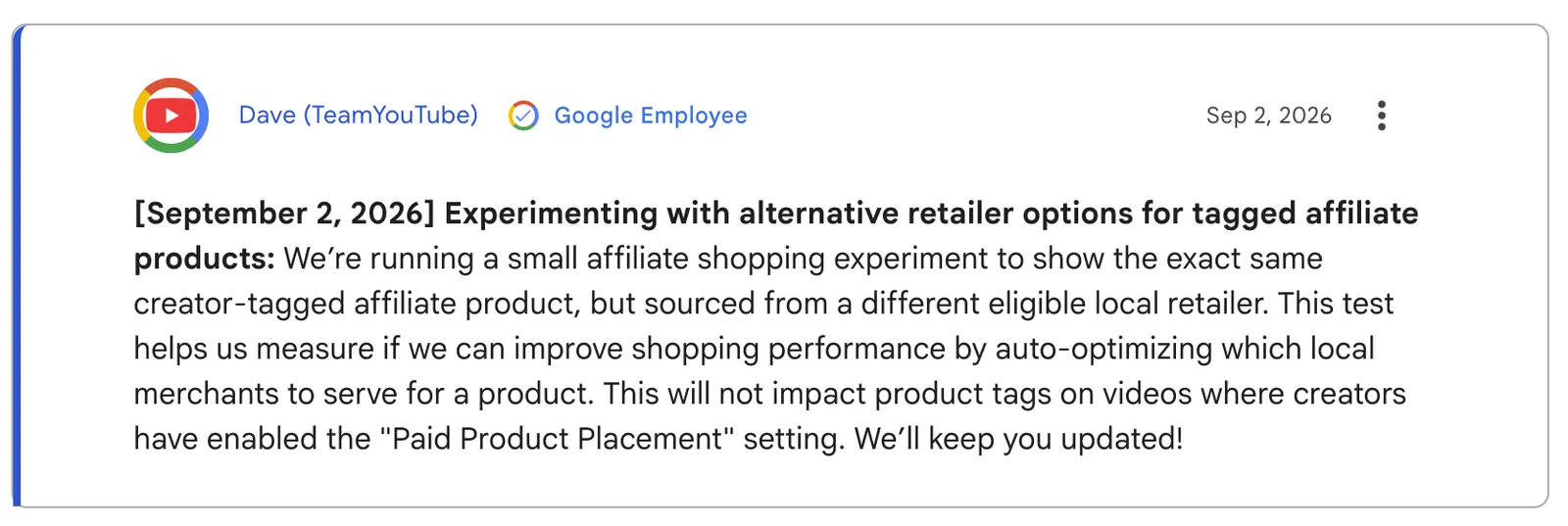
- Why this is great news: By reducing delivery times and costs for buyers, conversion rates increase directly. For video creators, this potentially translates to more sales and, therefore, higher commissions.
Transparency and Compliance: The Screws Are Tightening (But Also Loosening)
When it comes to paid partnerships, the platform is revising the wording of its disclosure labels to make the sponsored nature of videos immediately clear to the audience. But the real innovation lies in automation: YouTube now uses a detection system capable of automatically adding the partnership label if it identifies that a disclosure has been omitted.
To help video creators navigate national regulations, which are often very strict depending on the region, new age and geolocation-based restriction options are being introduced for branded content.
This is an interesting two-pronged move by the platform. On the one hand, YouTube is protecting itself from legal liability by ensuring compliance. On the other hand, by making the geographic management of partnerships more flexible and optimizing local partnerships, the video giant prevents creators from having to turn down brand contracts because they can’t target the right audience. It’s a pragmatic development that benefits both the business and the user experience.
Missing June 2026 Data in Google Search Console
Google Search Console is currently experiencing a minor glitch in its indexing report: some data for June 2026 is missing for several sites. However, this does not mean that the affected pages have been deindexed or that there is a problem affecting their visibility in Google. Rather, it is a data gap caused by a data collection issue.
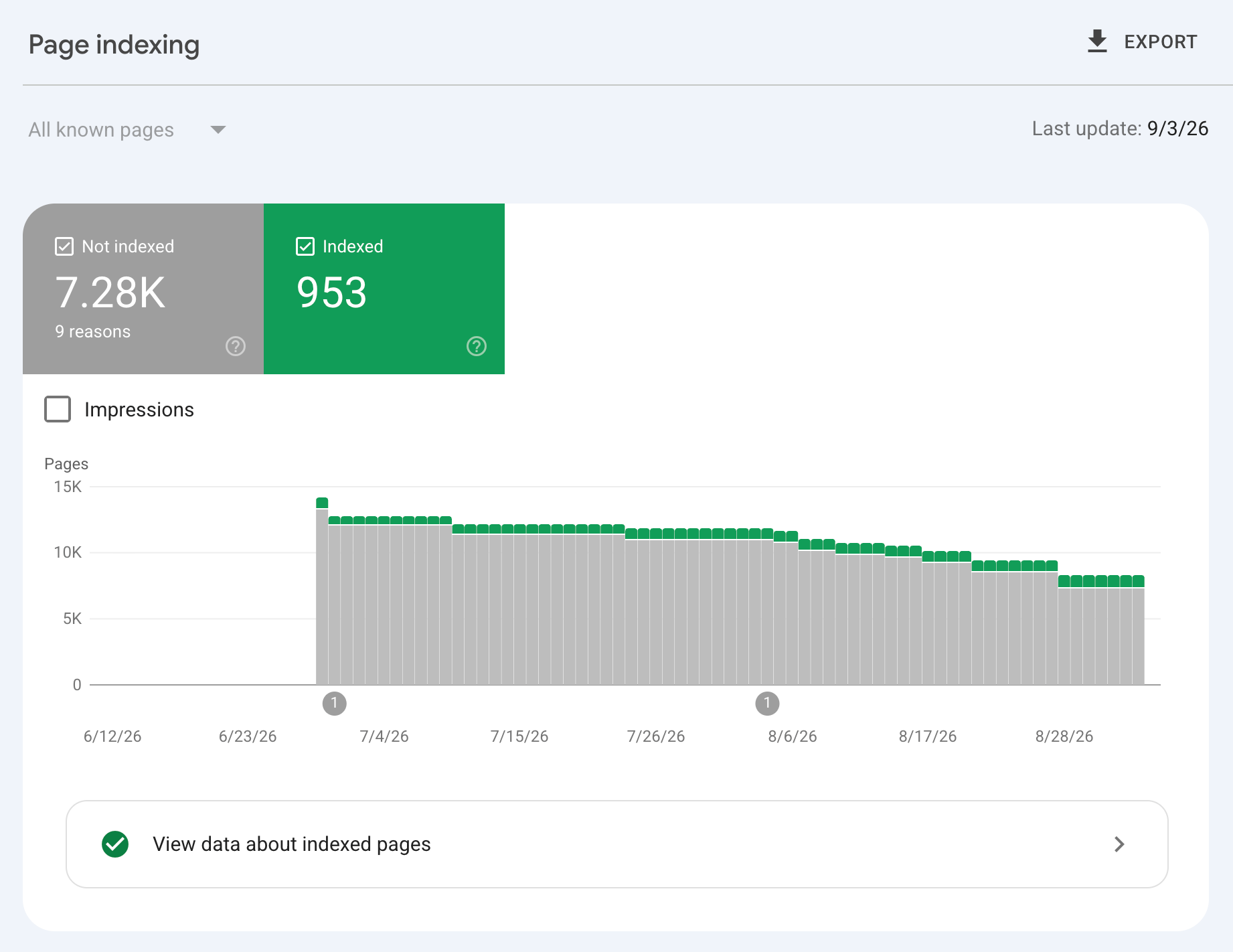
Google has indicated that this information may not be retrievable. For SEO professionals, this serves as a reminder of the importance of not jumping to conclusions too quickly based on a single data source. An anomaly in Search Console does not necessarily mean there is a problem with your site.
Even if the issue is relatively minor, it can be frustrating for those who use this data to track their performance and compare results from one month to the next.
ChatGPT Shuts the Door on Certain Competitors in Its Ads
As OpenAI rapidly expands its advertising offerings within ChatGPT, the company appears to be drawing a clear line in its ad policies between the advertisers it accepts on its platform and its direct competitors.
This decision is particularly interesting given that ChatGPT itself is expanding into these sectors. By developing its own image and voice generation features, OpenAI finds itself in a position where companies seeking to purchase advertising space on ChatGPT may also be viewed as rivals.
Adobe is reportedly among the companies affected by this change. The company had participated in OpenAI’s early advertising initiatives, notably to promote Acrobat Studio and Firefly. According to information cited in the article, Adobe was reportedly informed that standalone products related to image and voice generation could no longer be featured in advertising campaigns on ChatGPT.
For now, however, the restriction does not appear to apply to all categories of artificial intelligence tools. Video-generation solutions, in particular, may continue to be advertised on the platform.
This development warrants close monitoring. It makes sense for a company to establish rules for its advertising network, but the situation becomes more complicated when the advertising platform itself is owned by a company that develops competing products. As ChatGPT plays an increasingly important role in marketing strategies, OpenAI’s decisions regarding advertisers could have repercussions far beyond online advertising alone.
Google Shopping Campaigns: Why Your CTRs Are Rising
If you’ve been analyzing your Google Ads performance lately, you may have noticed an intriguing trend: a rising click-through rate (CTR) on your Shopping and Performance Max campaigns, even as impression volume has remained flat or declined slightly.
Is this a misinterpretation or a genuine improvement in performance? According to a recent study conducted by Mike Ryan (Smarter Ecommerce) and supported by data from Optmyzr, the answer most likely lies in Google’s AI Overviews.
The “Reverse Crocodile Effect” of AI Overviews
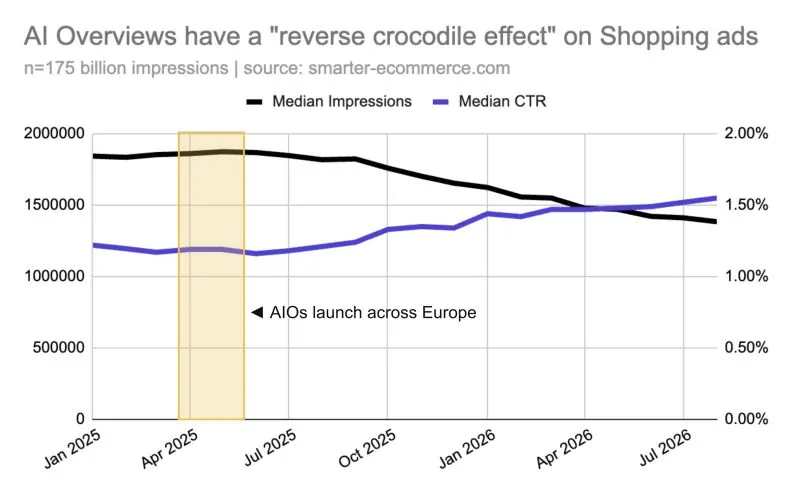
Source: Search Engine Land
In traditional organic SEO, the advent of generative AI has triggered what Mike Ryan calls the crocodile effect of SEO: publishers gain visibility but lose clicks.
In SEA (Shopping), we’re seeing the exact opposite:
- A sharp drop in impression volume
- An increase in CTR (up to +17% to +20% year-over-year)
In fact, your ads aren’t necessarily generating more raw engagement: they’re simply being shown less often, but to a more targeted audience.
What Is Google Doing Behind the Scenes?
The main hypothesis is based on an algorithmic sorting strategy called experience switching:
- For informational queries or those with low purchase intent: Google reportedly prioritizes displaying AI Overviews to answer the user’s query, thereby hiding Shopping ads (which causes your impressions to drop).
- For queries with very high purchase intent: Google reserves the SERP for traditional Shopping ads to maximize the profitability of clicks.
Rarely displayed side by side, AI answers and Shopping ads now seem to be dividing up the space exclusively between themselves.
What This Means for Your Media Strategy
Don’t be fooled by a high CTR. A rising CTR amid a decline in impressions often means you’re losing overall reach. If you evaluate the health of your Shopping campaigns based solely on this metric, you risk overlooking a loss of exposure among users in the research phase (top of the funnel).
Furthermore, this mutually exclusive selection phase (either AI or the ad) is likely only temporary. As Google refines its models, e-commerce ads will be integrated directly into the very heart of AI Overviews.
What to monitor right now:
- Track impression volume and overall traffic rather than just CTR.
- Keep an eye on the coverage of your strategic keywords to see if your products are appearing for broader search queries.
- Prepare your data feeds (Google Merchant Center) to support increasingly conversational ad formats.
Whether you’re navigating new AI formats, adjusting your Google Ads campaign metrics, or optimizing your social media strategy, the digital landscape demands constant agility. Don’t let these changes slow down your growth: contact our team of experts today to review your marketing strategies and stay one step ahead of your competitors.