


Google Tag Manager: A Major Advancement in Tag Management
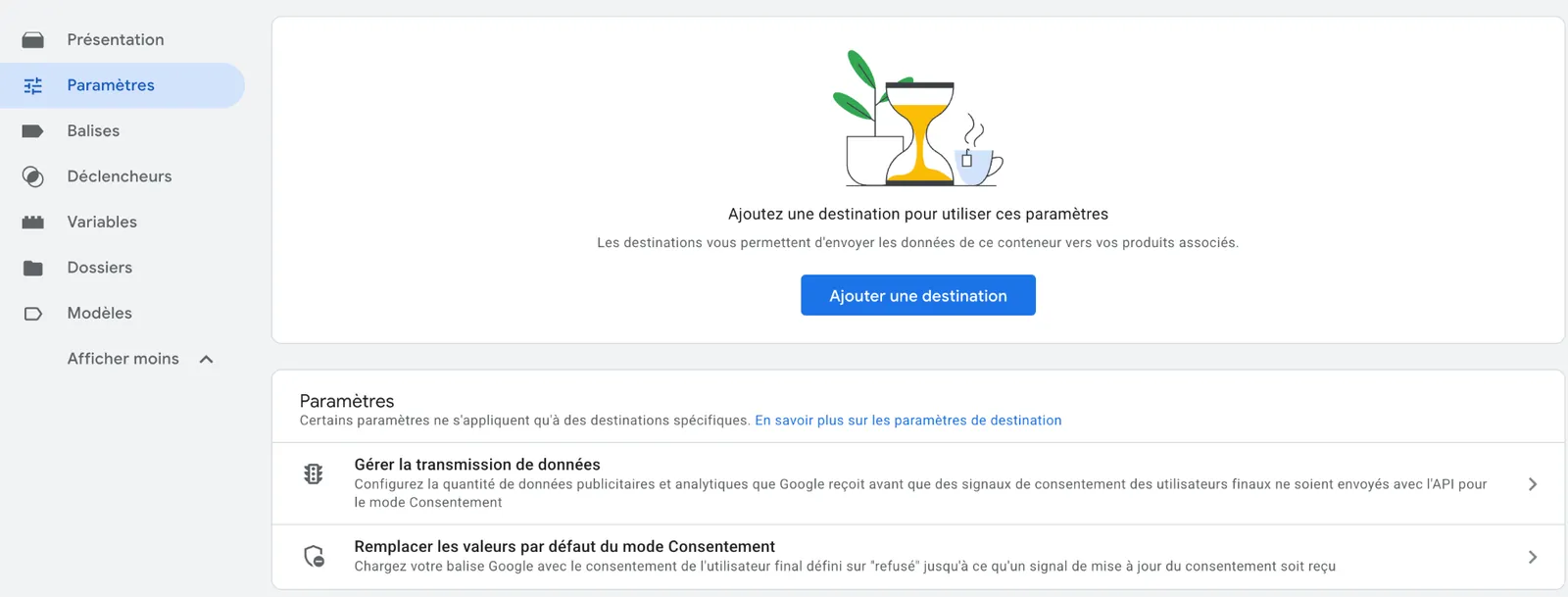
Google is beginning to roll out a new tagging experience in Google Tag Manager (GTM). Specifically, this update changes the way Google tags are organized and configured within a container.
Settings that were previously managed in separate tags can now be consolidated into a centralized configuration, while associated Google services will be managed as container destinations.
The goal is to simplify tag management and reduce the resources required for their operation, particularly by allowing data to be sent to Google destinations without separately loading the gtag.js library in certain cases.
What the update should improve:
- Performance: reduced loading of additional resources associated with Google tags, which could help improve site performance.
- Centralized settings: manage Google configurations from a single location, rather than having to adjust them individually in multiple tags.
- Destination management: simplified organization of Google services associated with the container.
- Collaboration and access control: improved visibility into destinations and their permissions.
Before upgrading, it is important to review existing settings, especially when multiple tags use different configurations, to resolve any potential conflicts before consolidating them.
It is also recommended to verify that events and conversions are functioning properly, even though event tags and triggers are preserved during migration. The Google destinations associated with the container and the permissions granted to them must also be verified.
Finally, it’s best to test changes in Preview mode in GTM before publishing them. Although this optimization is primarily intended to improve performance, the actual gains will depend on the site’s configuration and the tags used.
Muse: The AI That’s Transforming the Customer Journey
Launched in September 2026, Muse is Meta’s personal assistant designed to perform tasks on users’ behalf. Among other things, it can organize a schedule, plan a trip, fill out forms, manage certain communications, or search for products online. Using its browser and connected apps, it can perform a series of actions to achieve a goal.
From a marketing perspective, this development is particularly interesting: AI no longer merely informs or advises consumers; it can also intervene directly in their journey. This capability could transform the way users discover products, evaluate their options, and make decisions.

Opportunities: Reducing Friction and Simplifying the Customer Experience
One of Muse’s key strengths is its ability to reduce the effort required to complete a task. Rather than conducting multiple searches, comparing offers, and navigating between several platforms, users can delegate some of these steps to the assistant.
For brands, this shift raises a strategic question: how can they remain visible and relevant when consumers no longer carry out every step of their search themselves?
As AI plays an increasingly significant role in the selection of products and services, the quality of available information, the relevance of the offering, and the ability to meet users’ needs could become even more critical.
Muse thus illustrates a shift in digital marketing: the customer experience no longer relies solely on the ease of navigation within a website or app, but also on the ability to simplify the entire journey.
The Challenges: Trust at the Heart of Adoption
This convenience, however, rests on one essential element: trust. To act on the user’s behalf, Muse may require access to emails, calendars, and other personal apps.
The issue, therefore, concerns not only data security but also the transparency of the decisions made by the assistant and the degree of control retained by the user.
The concerns raised by the involvement of human operators in certain calls, without what users consider sufficient information, illustrate the importance of this issue. Meta has stated that it has suspended this practice pending improvements in transparency.
From a marketing perspective, trust cannot be viewed as merely a communication tactic: it determines users’ willingness to delegate tasks and share their information.
For companies developing this type of assistant, explaining the permissions requested, making actions understandable, and allowing users to retain control will be essential to adoption.
The real challenge for Meta will therefore be to demonstrate that Muse truly simplifies everyday life without compromising users’ sense of control. Because the more AI is involved in consumers’ decisions and actions, the more the value of the experience depends on its ability to be useful, relevant, and trustworthy.
A New Report to Analyze Visibility in AI Search on Bing Webmaster Tools
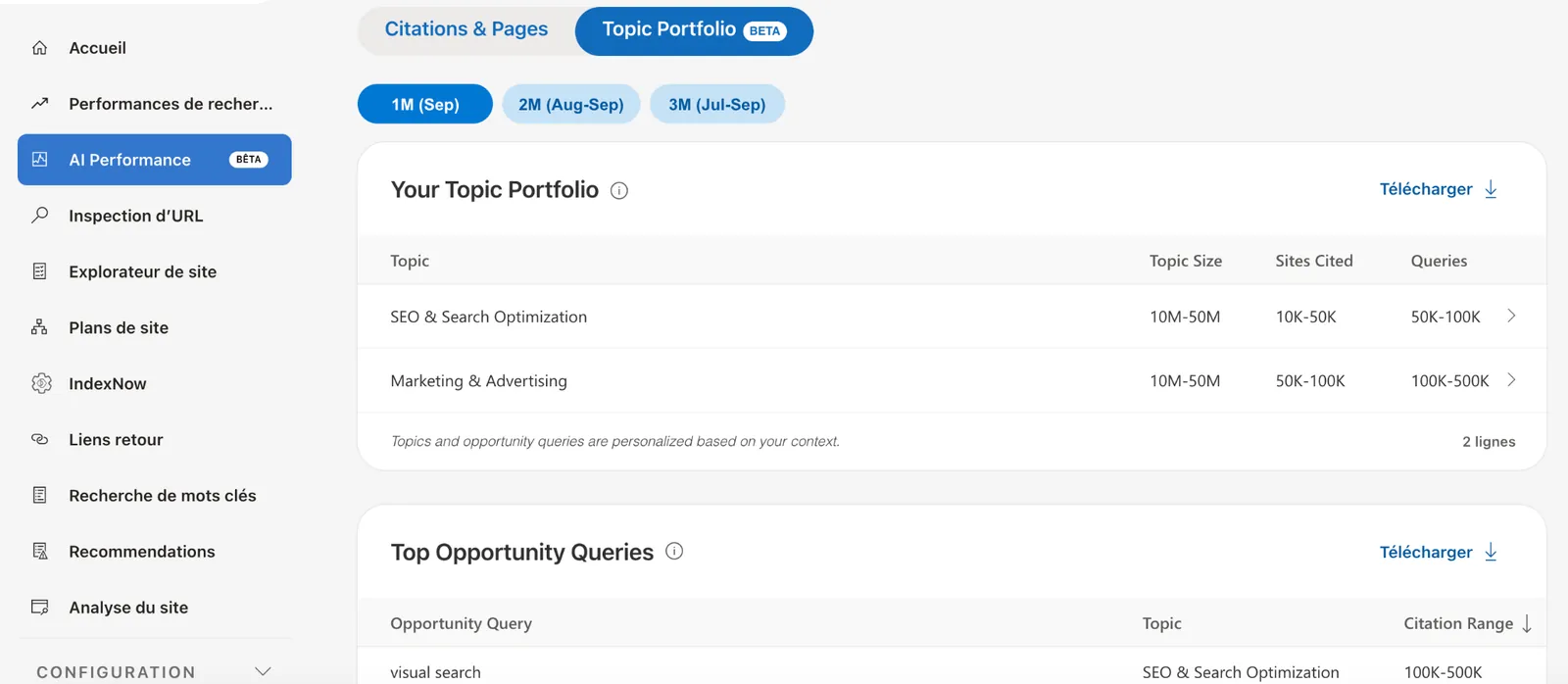
Microsoft is rolling out a new beta feature in Bing Webmaster Tools: the “Topics Portfolio”, available in the “AI Performance” section.
This report groups related search queries into broad themes to provide a better understanding of how a site appears in AI-generated responses.
Key features:
- Thematic overview: identify the topics for which a site is mentioned in the AI responses.
- Competitor analysis: estimate the number of sites mentioned and the importance of each topic.
- Growth opportunities: identify search queries for which other sites are mentioned, but not your own.
- Content optimization: explore search queries associated with each topic to guide SEO efforts.
Things to keep in mind:
The data presented is approximate, and the topic classification, generated by AI, may contain inaccuracies. Additionally, sites with limited data may not have access to the report.
Growth opportunities should therefore be viewed as avenues for further analysis rather than definitive recommendations.
To view this new feature, log in to Bing Webmaster Tools and open “AI Performance”, then the “Topic Portfolio” tab, if available.
This feature offers a new way to analyze visibility in AI search and identify opportunities to improve your content strategy.
Social Media: A Tool for Increasing Visibility in AI-Powered Search Results
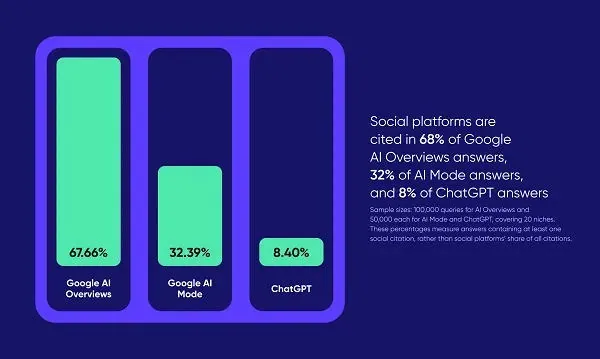
According to a study by SE Ranking, social media platforms regularly appear in the results generated by AI-powered search tools.
An analysis of 100,000 keywords reveals, in particular, that links to social media are present in 67.66% of Google AI Overviews responses, compared to 32.39% in Google’s AI Mode and 8.4% in ChatGPT’s responses.
Source: Social Media Today
Key findings:
- A presence that matters: content published on social media can contribute to a brand’s visibility in AI responses.
- Different platforms depending on the tool: YouTube is frequently cited by Google’s AI, while Reddit and LinkedIn feature more prominently in ChatGPT’s responses.
- A strategy tailored to each platform: the sources cited vary depending on the tool and the type of query. Therefore, there is no one-size-fits-all method for improving visibility in AI-generated responses.
Key takeaways:
A social media presence does not guarantee that you’ll be cited by AI tools. Results vary by platform and can change rapidly.
It is therefore best to view social media as a complementary lever to your SEO strategy, prioritizing relevant content, an active presence, and an approach tailored to your audience.
This study underscores that online visibility is no longer limited to traditional search results: a diversified content strategy can also help strengthen a brand’s presence in AI-powered search environments.
The Evolving Landscape of Ad Placement Control on Meta Ads
Meta is continuing to automate its advertising systems by gradually reducing the options that allow advertisers to manually choose where their ads appear.
Some controls have already been removed in certain accounts for campaigns focused on engagement, lead generation, app promotion, and sales. However, campaigns aimed at brand awareness and traffic still retain certain control options.
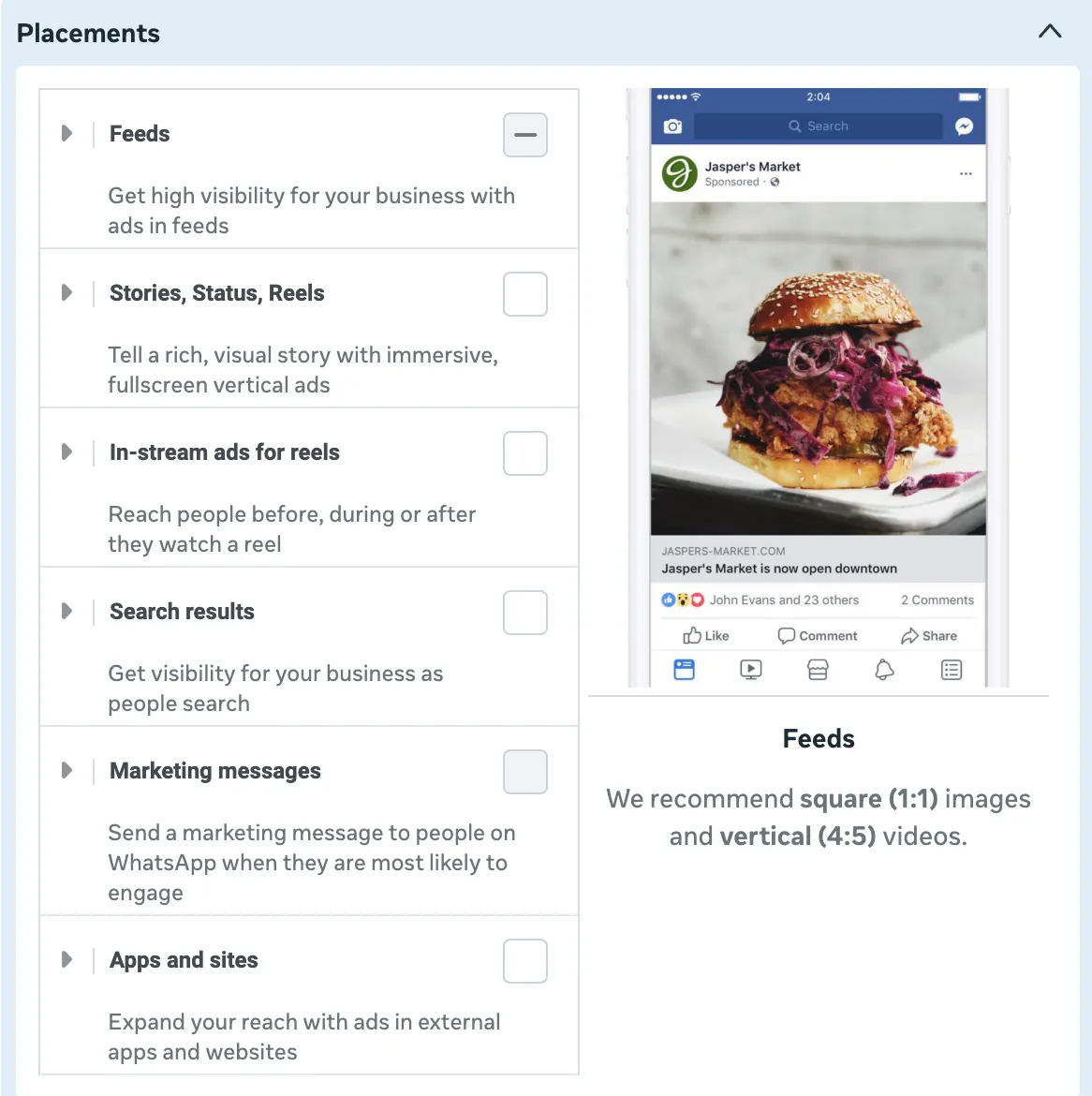
To adapt to these changes, Meta offers various solutions. In particular, advertisers can customize their ad creatives based on ad placements, adjust the weight assigned to certain placements using bidding rules, and utilize the exclusions still available at the account level.
This change gives Meta’s automated system more leeway to serve ads where it believes they will perform best. Advertisers will therefore need to adapt their creative assets to different formats and closely monitor their campaign results.
It will also be important to regularly review the options available in Ads Manager, as the level of control may vary depending on the campaign objective and ad accounts.
The challenge will be to leverage automation while ensuring that ad placements and creatives remain aligned with business objectives.
Knowing How to Adapt to Change
These new developments reflect a shift toward more integrated tools and increasingly automated systems, where visibility and performance rely on a multifaceted approach.
Whether it’s optimizing data tracking, gaining a better understanding of your presence in AI-generated search results, or adapting your advertising campaigns, it remains essential to stay abreast of changes and evaluate their relevance to your goals.
The key is to take advantage of new opportunities while maintaining a thoughtful, data-driven approach tailored to your business reality.
Need guidance to navigate these changes? Schedule an exploratory meeting!